
Thinking about studying, working, or living in Korea? Sooner or later, someone will ask you: “What’s your TOPIK level?” TOPIK is South Korea’s official Korean language test, and a good score can open the door to Korean universities, jobs, and even some visas.
If you’ve never taken a language exam before, TOPIK can look confusing at first. Below, you’ll find a quick comparison of TOPIK I and TOPIK II and a simple guide to choosing the right test. After that, we cover each level, what’s on the test, how to register, and a prep checklist so you can walk into the exam room with confidence.
TOPIK I vs. TOPIK II at a Glance
| TOPIK I | TOPIK II | |
|---|---|---|
| Levels | 1–2 (beginner) | 3–6 (intermediate to advanced) |
| Sections | Listening, Reading | Listening, Writing, Reading |
| Total score | 200 | 300 |
| Test time (paper) | 100 minutes | 180 minutes |
| Good for | Your first official result; beginners | University, work, and advanced goals |
Which TOPIK should I take?
- You can read Hangul and handle basic conversations (introductions, shopping, ordering food) → TOPIK I
- You can talk about everyday topics and follow simple news → TOPIK II
- Your university, employer, or visa asks for Level 3 or higher → TOPIK II
- Not sure? Try a past paper of each test (see section 7) and see which one feels manageable.
Your level (1–6) comes from TOPIK I or TOPIK II. The TOPIK Speaking test is separate and is graded on its own.
Table of Contents
- What Is TOPIK?
- Why Take the TOPIK Test?
- TOPIK I vs. TOPIK II: Levels and Scores
- TOPIK Test Format
- The Separate TOPIK Speaking Test and What’s Changing
- How to Register for TOPIK
- How to Prepare for the TOPIK Test
- Quiz: Test Your TOPIK Knowledge
- TOPIK FAQ
- Final Thoughts
1. What Is TOPIK?
TOPIK stands for the Test of Proficiency in Korean. In Korean, it’s called 한국어능력시험 (Hangugeo Neungnyeok Siheom), and many learners simply call it 토픽 (topik).
The test is run by the National Institute for International Education (NIIED), part of South Korea’s Ministry of Education. It measures how well non-native speakers can understand and use Korean, and it has been held since 1997. As Kyejin and Michael point out in our lesson on Korean proficiency tests, just over 2,000 people sat that very first TOPIK. Today, more than half a million people take it every year, both in Korea and around the world.
TOPIK isn’t the only option. The same lesson introduces the KLAT (Korean Language Ability Test), run by the Korea Educational Testing Service. It focuses on practical communication, has no writing section, and is scored out of 500 points. Many learners find it easier than TOPIK, which is more academic, and it can be useful for job seekers. Still, TOPIK is the official test, so if you’re applying to a Korean university or employer, check which test they accept before you register.
Want a quick audio introduction? Teacher Kyejin explains the basics in the lesson What Are Some Common Korean Proficiency Tests?
2. Why Take the TOPIK Test?

People take the TOPIK test for many different reasons:
- University admission: Many Korean universities ask international students for TOPIK Level 3 or higher, and some programs require Level 4 or more. Always check your school’s exact requirement.
- Jobs: Korean companies and organizations often use TOPIK scores to check a candidate’s Korean level.
- Visas and residency: TOPIK results are used in some visa and immigration procedures in Korea. Requirements change, so check the latest rules for your visa type.
- Scholarships: Some scholarship programs for international students give extra credit for a TOPIK score.
- Personal goals: Many learners simply want an official way to measure their progress and stay motivated.
3. TOPIK I vs. TOPIK II: Levels and Scores
TOPIK is divided into two tests. You choose which one to take, and your level is decided by your total score. There’s no single pass mark: the higher you score, the higher the level you receive.
- TOPIK I (초급, chogeup, “beginner”) covers Levels 1 and 2.
- TOPIK II (중·고급, jung-gogeup, “intermediate–advanced”) covers Levels 3 to 6.
| Test | Level | Score needed | What it means |
|---|---|---|---|
| TOPIK I | Level 1 | 80–139 (out of 200) | Basic survival Korean: introducing yourself, shopping, ordering food |
| TOPIK I | Level 2 | 140–200 | Everyday tasks like making phone calls and asking for favors |
| TOPIK II | Level 3 | 120–149 (out of 300) | Daily life without much difficulty; using public places |
| TOPIK II | Level 4 | 150–189 | Understanding news and general topics; using Korean at work |
| TOPIK II | Level 5 | 190–229 | Using Korean in professional and academic settings |
| TOPIK II | Level 6 | 230–300 | Near-native ability for professional and academic work |
If you score below 80 on TOPIK I or below 120 on TOPIK II, you won’t receive a level. You don’t need to pass TOPIK I before taking TOPIK II, so if you’re already intermediate, you can go straight to TOPIK II.

Not sure which level to aim for? In the lesson What Are Some Common Korean Proficiency Tests?, KoreanClass101 teacher Kyejin and Michael describe what each level looks like in real life. At Level 1, you can introduce yourself, buy things, and order food using around 800 core words. By Level 2, you know roughly 1,500 to 2,000 words and can make phone calls, ask for favors, and switch between formal and informal Korean. Level 4 learners can follow parts of the news and newspapers and use some idiomatic expressions, while Level 5 is enough for professional work such as research. At Level 6, you can do all of this with no difficulty at all.
Hear Kyejin explain every TOPIK level
In What Are Some Common Korean Proficiency Tests?, KoreanClass101 teacher Kyejin and Michael explain TOPIK, KLAT, and what each level means in real life.
Listen to Kyejin’s LessonAiming high? Kyejin also shares advice in the live class The TOPIK Test: Tips for Getting a High Score on YouTube.
4. TOPIK Test Format
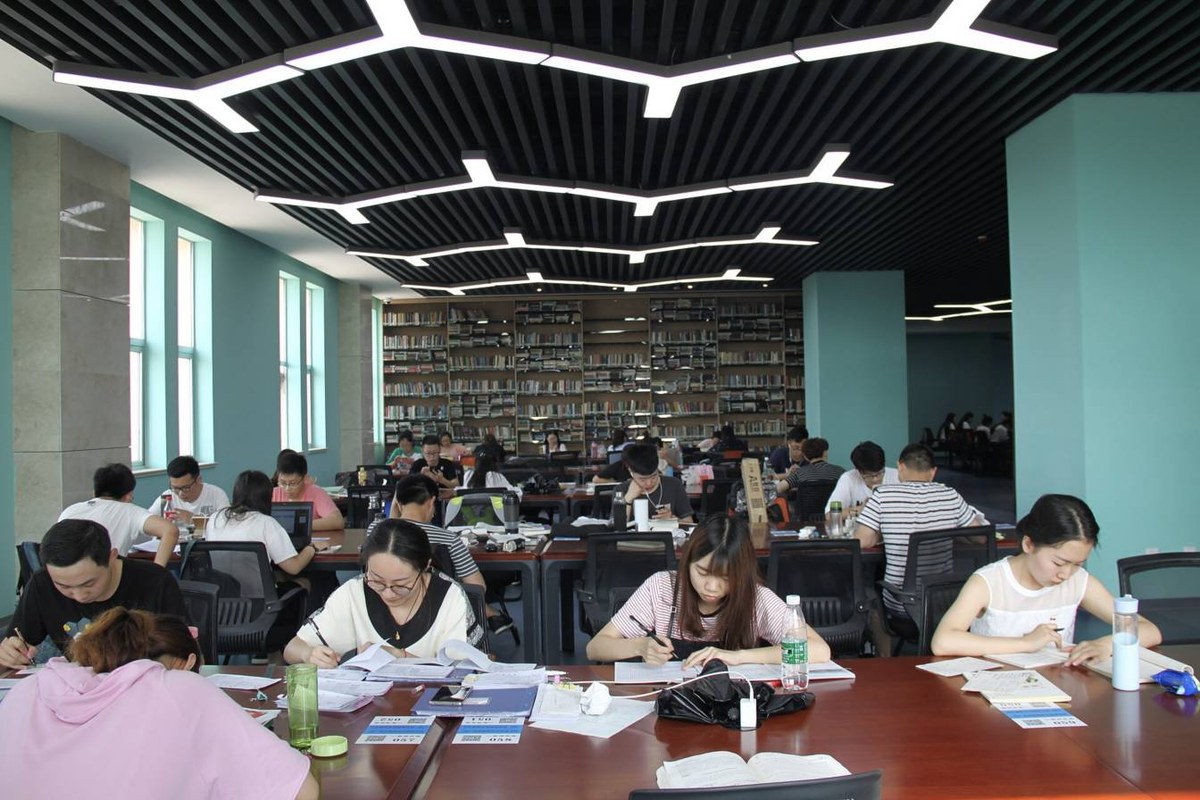
The traditional paper-based TOPIK test is organized like this:
| Test | Section | Time | Questions | Points |
|---|---|---|---|---|
| TOPIK I | Listening (듣기) | 40 min | 30 multiple-choice | 100 |
| TOPIK I | Reading (읽기) | 60 min | 40 multiple-choice | 100 |
| TOPIK II | Listening (듣기) | 60 min | 50 multiple-choice | 100 |
| TOPIK II | Writing (쓰기) | 50 min | 4 written answers | 100 |
| TOPIK II | Reading (읽기) | 70 min | 50 multiple-choice | 100 |
TOPIK I has no writing section, so it’s mostly about recognizing words and understanding short conversations and texts. TOPIK II adds a writing section with four tasks: two fill-in-the-blank sentences, a short description of a graph or chart, and an essay on a given topic.
There is also an internet-based TOPIK (TOPIK IBT), taken on a computer at a test center. It has the same levels and validity as the paper test, but fewer questions, a shorter test time, and faster results.
5. The Separate TOPIK Speaking Test and What’s Changing
For many years, TOPIK didn’t test speaking at all. Today, there is a separate TOPIK Speaking test (말하기, malhagi), taken on a computer and held a few times a year. It’s optional and is taken separately from TOPIK I and II.
This is a common point of confusion: the Speaking test does not change your TOPIK I or TOPIK II level. It is a separate exam with its own result, so if a school or employer asks for “TOPIK Level 4,” they usually mean TOPIK II unless they say otherwise.
The test is also changing. In September 2026, Korea’s Ministry of Education announced the first major TOPIK reform in 15 years, including AI-assisted question writing and a home-based test option planned from 2029, starting with lower levels. For 2027, TOPIK will be offered 15 times in Korea: six paper-based tests, six internet-based tests, and three speaking tests.
6. How to Register for TOPIK

- Where to apply: In Korea, you register on the official TOPIK website (topik.go.kr). Outside Korea, TOPIK is usually organized by Korean embassies, Korean Education Centers, or partner universities, so check with your local organizer.
- When: Registration closes several weeks before each test date, and seats in popular locations can fill up quickly, so apply early.
- Cost: In Korea, the paper test costs ₩40,000 for TOPIK I and ₩55,000 for TOPIK II. The internet-based test costs ₩70,000 and ₩95,000. Fees outside Korea vary by country.
- Results: Your TOPIK score is valid for two years from the date results are announced.
- Test day: Bring your admission ticket (수험표, suheompyo) and an official photo ID, and arrive early. You won’t be allowed in once the test has started.
Check before you book
Test dates, fees, registration periods, score validity, and eligibility rules can change, and they vary by country. The figures above were checked in November 2026. Always confirm the latest details on the official TOPIK website (topik.go.kr) or with your local test organizer before you register.
Want to understand the instructions on test day? In the video lesson Putting Your Korean to the Test, a teacher announces a test and gives the class instructions you could easily hear in any exam room:
- 오늘은 시험을 칠 거예요. (oneureun siheomeul chil geoyeyo) — “Today we will take a test.”
- 책은 책상 밑 서랍에 넣어주세요. (chaegeun chaeksang mit seorabe neoeojuseyo) — “Please put your books in the drawer under your desk.”
- 아홉 시부터 열한 시까지 (ahop sibuteo yeolhan sikkaji) — “from nine o’clock to eleven o’clock”
- 정답은 한글로 쓰세요. (jeongdabeun hangeullo sseuseyo) — “Write your answers in Hangul.”
You can also practice talking about exams and results in Korean with When Is Your Exam in South Korea?
7. How to Prepare for the TOPIK Test

For insider advice, watch KoreanClass101 teacher Kyejin in our live class TOPIK Exam Prep: Tips from a Real Examiner! on YouTube. Then work through this checklist:
TOPIK prep checklist
- ☐Pick your test and target level. Decide between TOPIK I and TOPIK II, and find out the exact level your university, employer, or visa needs.
- ☐Check dates and register early. Note the registration deadline for your test center; popular locations fill up fast.
- ☐Do past papers under time pressure. NIIED publishes previous TOPIK papers on its official website. Time yourself to get used to the pace.
- ☐Train your ears every day. The listening section moves quickly. Listen to Korean podcasts, dramas, and lessons daily.
- ☐Learn exam-style vocabulary. TOPIK II uses news, society, and academic topics, so go beyond everyday words.
- ☐Practice writing to a time limit (TOPIK II). Describe graphs and write short essays in Korean within 50 minutes.
- ☐Prepare for test day. Print your admission ticket, pack an official photo ID, and plan to arrive early.
Here are some useful Korean words you’ll see on the TOPIK test and its website:
| Korean | Romanization | English |
|---|---|---|
| 한국어능력시험 | Hangugeo neungnyeok siheom | Test of Proficiency in Korean |
| 시험 | siheom | test, exam |
| 급 | geup | level, grade |
| 듣기 | deutgi | listening |
| 읽기 | ilgi | reading |
| 쓰기 | sseugi | writing |
| 말하기 | malhagi | speaking |
| 초급 / 중급 / 고급 | chogeup / junggeup / gogeup | beginner / intermediate / advanced |
| 수험표 | suheompyo | admission ticket |
| 합격 | hapgyeok | pass (an exam) |
For more practice, try the upper-intermediate lesson Taking a Test in Korea.
8. Quiz: Test Your TOPIK Knowledge
Quick check: how well do you know the TOPIK test? Tap an answer to see if you’re right.
Question 1. Which test should you take if you need Level 4 for a Korean university?
Question 2. Which section does TOPIK I not have?
Question 3. What does 수험표 mean?
Question 4. Does the TOPIK Speaking test change your TOPIK II level?
9. TOPIK FAQ
Is the TOPIK test difficult?
It depends on your level. TOPIK I is designed for beginners and focuses on listening and reading, while TOPIK II is much harder because it includes writing and more advanced topics. The good news is that every level counts, so you can start with TOPIK I and work your way up.
How long is a TOPIK score valid?
TOPIK results are valid for two years from the date the results are announced.
Do I have to take TOPIK I before TOPIK II?
No. You can register for TOPIK II directly if your Korean is already at an intermediate level.
How much does the TOPIK test cost?
In Korea, the paper-based test costs ₩40,000 for TOPIK I and ₩55,000 for TOPIK II (as of November 2026). Fees in other countries are set by local organizers, so check the official TOPIK website or your local organizer for current prices.
What TOPIK level do I need for a Korean university?
Many universities ask international students for at least TOPIK Level 3, and some programs require Level 4 or higher. Requirements differ by school, so always check with the university.
10. Final Thoughts
TOPIK is the most widely recognized way to prove your Korean skills, whether you’re planning to study, work, or simply challenge yourself. Choose the right test, aim for a clear target level, and practice listening, reading, and writing a little every day.
For more test-day Korean, try Taking a Test in Korea, watch Kyejin’s live class TOPIK Exam Prep: Tips from a Real Examiner!, and find lessons for every level on KoreanClass101.
Start your TOPIK prep with Kyejin
Listen to What Are Some Common Korean Proficiency Tests? and find out which test and level fit your goals.
Listen to the LessonAre you planning to take the TOPIK test? Tell us which level you’re aiming for in the comments!